Showing posts with label my speech room. Show all posts

Monday, February 17, 2014

Educator Evaluation for SLPs: Student Learning and Professional Practice Goals

Background for graphics provided by: Cutesy Clickables by Collaboration Cuties
I’ve done a few posts now where I’ve mentioned my student learning goal and professional practice goals for the Educator Evaluation that many districts have adopted. A decent number of people have asked me to share some information regarding my SLG and PPG. Last year was the first year my district used this evaluation method. In effort to stagger plans, some of us were to develop 1-year plans and others developed 2-year plans. I was on the one-year plan. This is good for you because I’ve now had to write TWO plans!

If you’re new to my page, I just want you to be aware that the majority of my caseload consists of preschool students. Because of that, you might not choose to work on the same goals, but they should give you an idea for your own goals!


For the 2012-2013 school year, I had a number of preschool students who had significantly reduced Mean Length of Utterance (MLU).  I decided to select a cohort of students who had an MLU of less than or equal to 2.0 for my SLG.  I'm not sure if other districts have the same type of plan, but we are required to submit our SLG and PLG for approval, then create a plan that includes action steps. This is a basic outline of that plan. The "due dates" of the steps are included in parenthesis.

Student Learning Goal:

By June 2013, 80% of an identified cohort of students with a BOY Mean Length of Utterance in Morphemes (MLU-M) of less than or equal to 2.0 will increase their MLU-M to 3.5 or greater as measured by language sampling.

Action Steps:

1. Obtain language samples and calculate BOY MLU (By 9/30/12). 
     *BOY = Beginning Of Year

2. Identify cohort of students with MLU of less than or equal to 2.0 (By 10/30/12)

3. Implement activities to target the following morphological structures/sentence types:
a. Plural -s (by 12/31/12 )
b. Subject-Verb (by 1/31/13)
c. Subject-Verb-Object  (by 3/31/13)
d.Prepositional Phrases (by 5/31/13)
4. To demonstrate effectiveness, by Progress Reporting Period 2 (March 2013), 80% of students in the cohort should see an increase in MLU to 2.75 or greater. 

5. For each student in the established cohort, I will provide home activities for parents to complete to facilitate carry-over of skills at least 4x/student during the 2012-2013 school year.
*2 activities sent by 2/28/13
*1 activity sent by 4/30/13
*1 activity sent by 6/20/13

Professional Practice Goal:

I will increase my content knowledge of Evidence Based Practice in the area of increasing MLU in preschool students by researching methods and establishing 4 different activities based on those methods by June 2013.

Action Steps:

1. Research evidence-based instructional strategies that target increasing MLU in preschool-aged students. Identify a minimum of two instructional strategies for use in therapy.
*By 12/31/12, search the American Speech-Language Hearing Association’s online database for articles related to preschool MLU.
*By 2/28/13, compile binder of resources for increasing preschool MLU containing at least 5 articles from journals or websites.
2. Develop/create activities to target the following morphological structures/sentence types:
a. Plural -s (by 12/31/12)
b. Subject-Verb (by 1/31/13)
c. Subject-Verb-Object (3/31/13)
d. Prepositional Phrases (5/31/13)
3. Research/trial at least 5 different iPad applications that are designed to (or can be adapted to) target morphology/sentence structure using the FIVES criteria.
*2 apps by 2/28/13
*2 apps by 4/30/13
*1 app by 5/31/13
I did share some of the activities I created for this project in previous posts. You can find them below.


I'm on a 2-year plan now, so my timelines will look a little bit different.  However, my caseload does change every year, so I wanted to reflect that!  For this go-around, I chose a cohort of students on an IEP for language delays/disorders (e.g., NOT articulation).  I also selected students in the 4-year old program that will be going to kindergarten in the next school year.

Student Learning Goal:

By the end of each academic year, 75% of students in an identified cohort (language delayed/disordered students in the 4-year old preschool program) will demonstrate an increase in vocabulary and describing skills (using the Expanding Expression Tool) to be able to state 5 or more attributes/features of 6 pictured objects.

Action Steps:
1. Identify cohort of students. (By 11/27/13) 
*We had a late start getting our plans in this year!

2. Obtain baseline data through the informal assessment (students will name and identify characteristics of 6 familiar objects presented in pictures) (By 11/27/13 )

3. Become familiar with the Expanding Expression Tool by reviewing manual (Ongoing)

4. Implement activities to target the individual beads on the EET strand:
a. Green (by 12/31/13)
b. Blue (by 1/31/14)
c. Eye  (by 3/31/14)
d. Wood (6/20/14)
e. Pink (1/31/15)
f. White (6/20/15)
5. To demonstrate effectiveness, by Progress Reporting Period 3 (June 2014), 75% of students in the cohort should be able to state 3 or more attributes/features of 6 pictured objects.
*Obtain informal assessments 4x/year (BOY, Progress Report 1, Progress Report 2, EOY).

Professional Practice Goal:

I will increase my content knowledge of Evidence Based Practice in the area of vocabulary skills in preschool students by researching developmental norms and the Expanding Expression Tool (EET), as well as creating/finding and implementing 6 different activities related to the beads on the EET strand by June 2015.

Action Steps:

1. Research evidence-based instructional strategies that target vocabulary development in preschool-aged students, including the Expanding Expression Tool.
*By 12/31/13, search the American Speech-Language Hearing Association’s online database for articles related to preschool vocabulary development.
*By 6/19/14, compile binder of resources for increasing preschool vocabulary containing at least 5 articles from journals or websites.
2. Develop/identify activities to target the individual beads on the EET strand:
a. Green (by by 12/31/13)
b. Blue (by 1/31/14)
c. Eye (by 3/31/14)
d. Wood (by 6/20/14)
e. Pink (by 1/31/15)
f. White (by 6/20/15)

Freebie Alert:
The informal assessment sheets I am using to track student performance can be downloaded as a freebie HERE.  My plan is to have students describe 6 different objects 4x in the year...Beginning of the Year (BOY), Progress Report 1 (PR1), Progress Report 2 (PR2), and End of the Year (EOY).  My plan is to repeat the first 6 words at the end of the year to get a good estimate of progress.  My prompt is "Tell me everything you know about a ___" and I give the student the EET strand. The sheets look like this:


For those of you who are new to the evaluation system, I hope this information is helpful!  I think once you have one evaluation cycle "under your belt," it will be easier to write and implement new plans!

I'm curious...Is your district following this evaluation system or are you doing something different? If you are doing a similar evaluation system, what are your SLGs and PPGs?

Tuesday, August 13, 2013

Dollar Tree Finds {Plus a Freebie}


I don't know about you, but the budget I'm given to buy therapy materials through my district is non-existent! (I'm somewhat OK with that though because anything I buy, I can take with me if I choose to switch schools.)  When you're buying your own materials, you really want to get the most for your money. Recently I made a visit to my local Dollar Tree (ok, three visits).  I found a few cool things that I'll be using in my therapy room this year and figured I'd share them with you!

Room Organization:

I have a shelving system in my room with containers for everything - scissors, crayons, markers, colored pencils, glue sticks are all in their own containers.  The only problem with this is when I'm trying to do an activity with a group and have to pull out five different containers for the supplies!  So, I got this cute little bin:


My plan is to keep it stocked with enough materials for a typical group to do a craftivity! I saw something on Pinterest where you add small (empty) vegetable cans to further subdivide the compartments and I may just do that as well!  I also got these cute stackable bins:


I don't have an actual desk (you can see pictures of my room here), so I don't have drawers.  I figured these would be a good place to store things like rubber bands, binder clips, pens, etc.

Student Reinforcers:

I love the party section of Dollar Tree for stocking up my prize box! I got toy frogs, lizards and dinosaurs, as well as those spinning-drum things, tops, pencils and erasers.


I found this cool thing as well!  It's a light-up wand with a spiky ball at the top!  I figured it would be a good sensory toy, but also double as a talking stick for my groups of blurters (I always end up with at least one of those!).


Therapy Activities/Materials:

Have you seen these Weird but True books from National Geographic Kids?  There is a free app in the series as well (facts are limited in the free version but you can do an in-app purchase for more). They're great for keeping older elementary students interested and you can use them for just about any language/articulation target!


Wind-up toys!  I had just passed up some cute wind-up toys as a local pharmacy that were $5.00 EACH!  I love wind-up toys for several reasons (they're good for getting kids to make requests and you can use them as a fun way to work on any "card" activity...see here for more on that)


Next, I found a trash can!  (Yes I meant to put it in therapy activities/materials, not in room organization!)  I saw this post on Schoolhouse Talk and decided I needed a trash can of my own!  You could also use a can like this for this activity from Crazy Speech World.


I was on the fence about grabbing these mini books, but after opening them, I'm glad I did!


Inside are fold-and-go books.  They are designed to target sight words, but I found that I can use them to target syntax, articulation, articles, auxiliary verbs, prepositions, etc.  Here are some examples:


I've been looking for sticky hands ever since I saw Jenna's post on Speech Room News.  I still haven't found them, but I did find these sticky lizards!  I figured the kids wouldn't mind lizards instead of hands!


I think this is my favorite find!  It's a dry erase poster called "Describing:  Bubble Map."  I just got the Expanding Expressions Tool and I thought I could modify this map for use with the EET!


Since many of us are getting ready for back to school, I created these circles with back-to-school themed vocabulary to put in the center of the map (there are 12 vocabulary words total) for describing purposes:


You can download these HERE.

I also grabbed some stickers and cute mechanical pencils for me, but didn't think those warranted a picture.  :)

What's been your best Dollar Store Find?


Wednesday, August 7, 2013

What's Your Super Power?

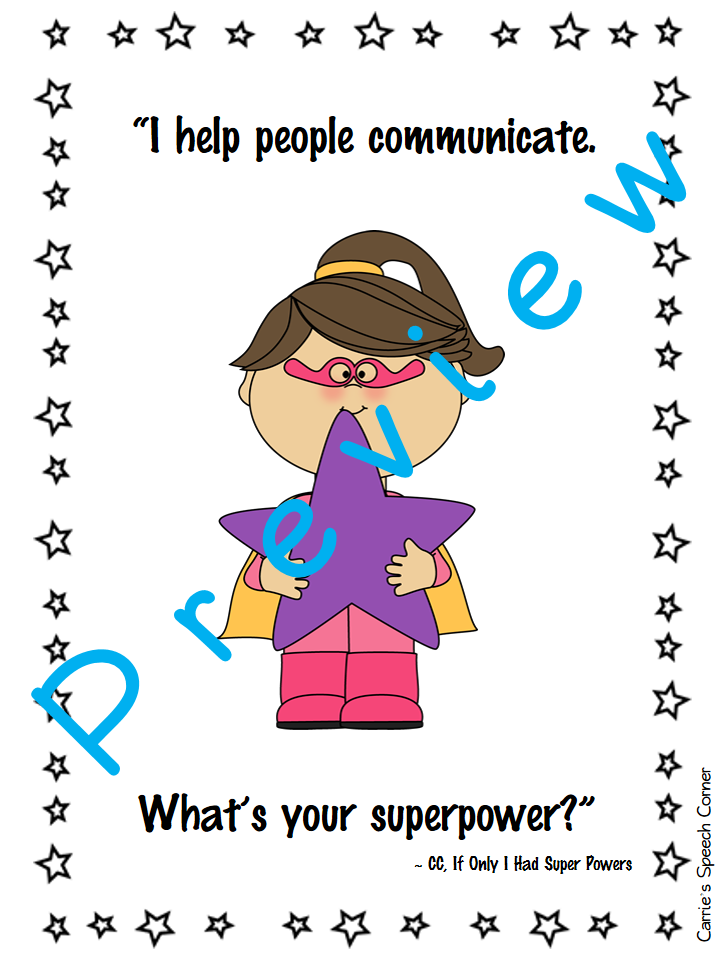
Have you seen this post by CC of If Only I Had Super Powers?  If so, you can probably relate to her experience.  I know I can!  Well, I loved the quote at the start of the post so much that I created some posters that you can use in your speech rooms as a little reminder of how awesome SLPs really are!

Here they are.  There's one for the ladies...


And one for the speechie gentlemen...


If you're wondering, I did get permission from CC to use her totally awesome quote!  If you like these posters, you can download them HERE.


PS, Like the Super Heroes theme? CC has a whole bunch of super hero super materials, including her Super Start to Speech room decorations and activities and her Super Planner, which is super, super cute!

Thursday, February 21, 2013

How I Organize TPT Materials

I've heard a lot of discussion lately about how to store those TPT packets, especially when you have a small space.  I figured I'd share how I organize my materials and maybe you'll find something that could work for you!  

For starters, I print and laminate the materials I plan on using (I do not always print the instruction sheets and I do not print sections that I think will be too difficult/too easy for my kids).  When I first started printing various materials from the internet (pre-Pinterest and pre-TPT), I used these large mailing envelopes.  I wrote the topic and contents on the front of the envelope.  


It may be difficult to see in this picture because they are the same color as the envelopes, but I use sheets of cardboard (from the bottom of water bottles) as dividers.  They are labeled with categories like Animals: Zoo, Animals: Farm, Books, Seasonal/Holiday, Articulation, Language Concepts, Games, etc.  I put them in these build-it-yourself shelving system I got at Target when they have their back-to-school college dorm items.  The one above is on top of my closet.  

Well, I ran out of envelopes, so I started using the gallon-size Ziplock bags.  I actually like these so much better because I can see what's inside!  Since I'm running out of space in the shelves above, I started putting some into theme-based binders.  You can place duct tape on one end of the Ziplock bag and hole-punch through it (I got this idea from Speech-Language Pirates). Here's a peek at my Thanksgiving binder:


I have more materials for some themes than for others.  For those themes that have a lot of materials, I use plastic storage containers like these:

(Click image to view on Amazon)

What about the materials you're using or about to use?

Here's how I keep the "What we're doing this week" items:


They're basically in a mail organizer I got from a local odd-lot store and I keep them on the shelf right behind my chair so I can just turn around and grab what I want.


And I store the "What's we'll be working on soon" in a dish-drainer organizer on another shelf.


In the silverware cup, I store my baggie of game pieces.  These are what I use for those open-ended game boards.  The baggie contains several game die, and game pawns.  I've been using those little rubber erasers as game pawns to make it more interesting for the kids.  I have transportation and animal themed erasers.


 I think that's about it!  How do you store your printed materials?

Saturday, September 8, 2012

Speech Room Tour

I've loved seeing pictures on blogs and Facebook of everyone's speech room!  After switching schools, my room is finally ready for the little ones (preschoolers and kindergarteners) to start on Monday!  I thought I would share...

My Door Sign:

 
 (Yup, it's Pinterest inspired.  Here's the original pin from Personal Pizazz by Lindsey.)

View from the Door:


To the right of the door is my workspace.


(I don't actually have a desk, these cubbies came with the room and could not be moved.  I figured I'd rather use them as a workspace than add a desk to the room).   *Ignore the ancient computer.  It will be removed soon!


Across from my workspace:


 More cubbies!  I use these to store my therapy books, binders, etc.


To the left of the door is my closet:

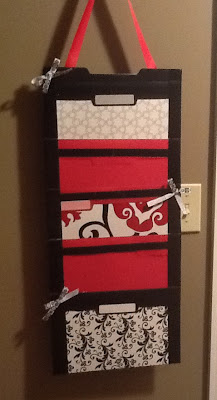
Are you noticing more Pinspiration here?  On the closet, I have three pizza pans from the Dollar Store spray painted black and attached with Velcro.  I did this so I could use magnets on the door.  The pin I originally saw used oven burner covers.  On the other door is a file folder organizer pinned from Remarkable Home. I'm using it to store frequently used papers...language sample forms and data collection sheets.


Inside the Closet:


Because I know some of you were wondering!  ;)

To the Right of the Closet: 


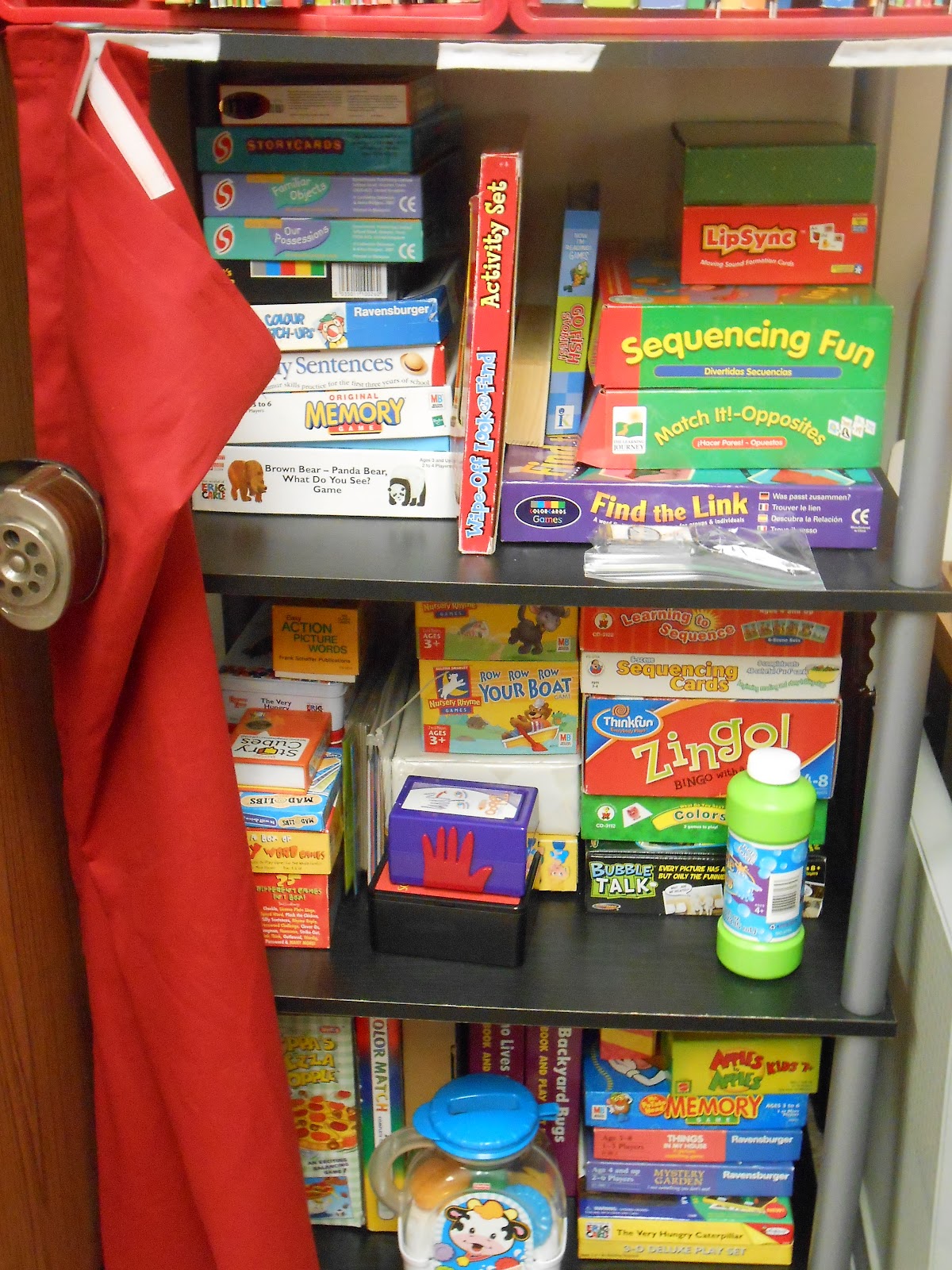
Cheap bookshelf I've had for a while...I covered the games and toys with a fabric curtain that attaches with Velcro.  Out of sight, out of mind!  The milk crates on top hold larger books that don't fit where I store my other books (see below).

To the Left of the Closet:
 

Another bookshelf for my testing materials.  I didn't really need the curtain here, (I don't typically have kids begging to participate in testing) but it looks less cluttered this way.


Some close-ups:
 

This is how I organize most of my children's books (They're in file cabinet drawers).  At my last school, I didn't have a great bookshelf for storing these types of books.  I started storing the books this way out of necessity.  I ended up liking it, so it stuck!

"Let's Talk" Sign:


Another Pinterest find!  Here's the original from Laura from Oh, How Pintearesting!

Schedule board:


Just a sample of how I organize my speech sessions.  With most of my expressive language/articulation kiddos, I start with the Word FLIPS (For Learning Intelligible Production of Speech) book from Super Duper, Inc.  I use it for 3-5 minutes at the start of my sessions.  It's a great warm-up for expressive/articulation activities.  Also, it a good preschool vocabulary building activity!


Bulletin Board:


Did you notice these?  I usually start the year with "Have You Filled a Bucket Today?" by Carol McCloud.  I scanned pages of the book to make the signs "Don't Be a Bucket Dipper!" and "Be a Friend ~ Fill a Bucket!"  I also found the cute little tin pail in the Dollar Spot at Target.  I'm going to be writing more about this book in an upcoming Guest Post on Let's Talk Speech-Language Pathology, so keep your eyes peeled!

Well, that's it!  A little peek inside my world!

What's your favorite, less than conventional, organizational trick?


PS, Did you see the "BEFORE" pictures on the Facebook page??? 

Saturday, August 4, 2012

Related Posts Plugin for WordPress, Blogger...